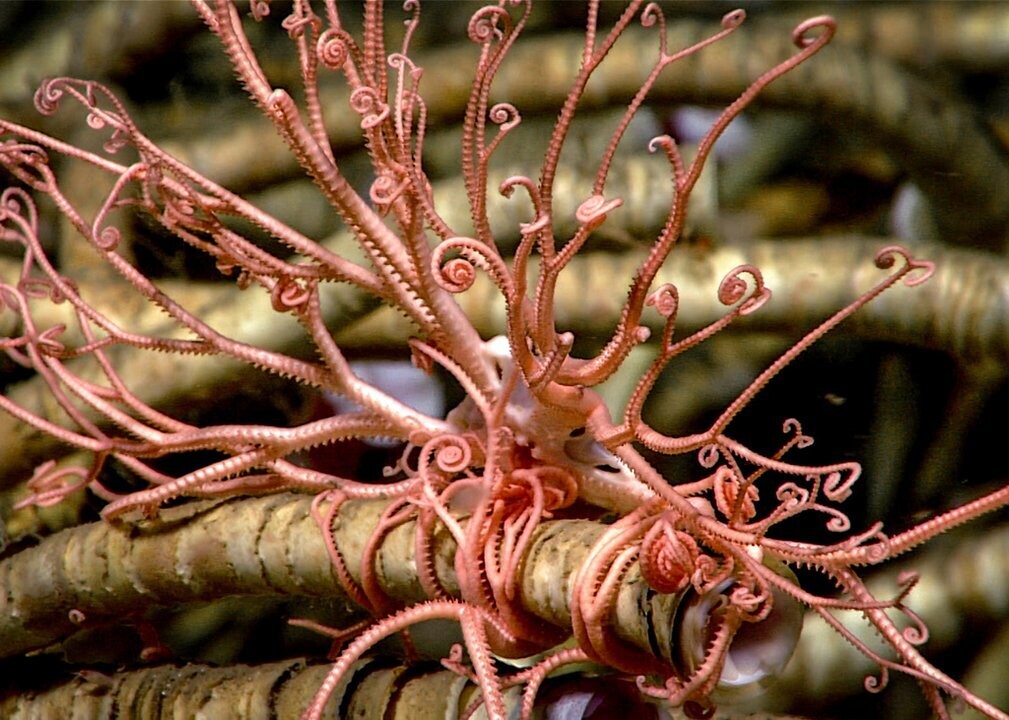
A part of the Argentine team that first discovered chemosynthetic ecosystems in the Argentine Sea will return to explore them, now using the technology of the now-famous SuBastian. It can dive to depths of up to 4,500 meters and will aim to collect samples of water, sediments, rocks, and benthic fauna.
In addition to SuBastian, the scientists will use the advanced instrumentation on board the Falkor (too) for acoustic mapping through multiple probes. They will also carry their own instruments developed specifically for the campaign, such as a high-volume environmental DNA sampling device.
A total of 25 scientists will be part of the voyage, 17 of whom are Argentine and 11 from the Faculty of Exact Sciences. Under the motto “Life in the Extremes,” the expedition will allow for live streaming of some of the planet's least explored underwater landscapes, inhabited by organisms that feed on gas seeps from the ocean's depths: chemosynthetic ecosystems.
The team of scientists, led by biologist María Emilia Bravo, a researcher at the Faculty of Exact and Natural Sciences of the University of Buenos Aires (UBA) and the National Council for Scientific and Technical Research (CONICET), will explore different points in the Argentine Sea until January 10, 2026, according to the Argentine News Agency (NA).
The Argentine UBA's Science, Technology, and Scientific Policy Information Service explains that gas seeps from the seafloor create environments toxic to most forms of life. However, there are microorganisms and animal species adapted to survive there and even consume the chemical energy produced by the microbial reduction of these gases.
In this way, without sunlight or photosynthesis, these biological communities find their sustenance in the so-called “cold seeps,” the methane leaks from the ocean floor. What thrives are these highly specialized bacteria and an extreme benthic fauna, composed of tube worms, chemosynthetic clams and mussels, and other animals capable of tolerating and even benefiting from the characteristics of these ecosystems.
A minimum of 15 dives of the remotely operated underwater vehicle (ROV) provided by the SOI (Schmidt Ocean Institute) are planned.